SI Image Detector Is this image SI (AI)-generated?
Upload a picture or paste a link. You get the probability that it was generated by SI (AI) models such as Midjourney, DALL-E, GPT-image or Stable Diffusion, the clues behind the score and the file's hidden metadata. Free, no credit card, images deleted after analysis.
Analysing...reading metadata, running the classifier (a few seconds)
How this SI image detector works
Part of the SI detector suite, the image tool combines two independent approaches, because neither is enough on its own. Our guide on how SI detectors work explains the methods in more depth, with real tests.
Pixel analysis. Our image classifier, trained on real photographs and on images from recent generators (Stable Diffusion and SDXL, Midjourney, DALL-E and GPT-image, Firefly, Flux and similar) looks for statistical patterns invisible to the eye: frequency artefacts, noise distribution, texture regularities. Its output is an SI (AI) probability.
Provenance and metadata. We read what the file says about itself: camera EXIF (make, model, exposure), C2PA Content Credentials signed by tools such as ChatGPT, Adobe Firefly or Leica cameras, IPTC and XMP flags that declare synthetic media, and software tags left by generation pipelines. How these signed manifests work, and what happens when they are stripped, is covered in C2PA and Content Credentials explained. Invisible watermarks are a different system, explained in SynthID explained: we do not read them.
The two are merged into a single score, and every clue is displayed with its weight. A signed C2PA manifest naming a generator is a strong signal. Missing EXIF is a weak one, because social networks strip it from real photos too.
How our SI image detector works: a pixel classifier and a metadata check (EXIF, C2PA Content Credentials, XMP) are combined into one SI probability, shown with every clue.
What the score means
The number is a probability, not a percentage of "SI content". Above roughly 70% we say Likely SI-generated; below 30% Likely a real photo; in between the honest answer is Uncertain, and we say so. A detector that only ever answers yes or no is hiding that uncertainty from you.
A real result from this tool: a photo of a red fox taken with a Canon EOS R100 (Peter Cooper Jr., CC0, Wikimedia Commons, resized to 2000 px) scores 0% and is labelled Likely a real photo. The clues and metadata explain why.
Known limits
Detection is an arms race. New generators, upscalers and "de-AI" filters appear every month, and each one shifts the patterns the classifier relies on. Screenshots, heavy JPEG compression, small thumbnails and strong edits degrade the signal. Illustrations, renders, paintings and stylised photos are harder than photos, which is why we combine two independent classifiers on them (see our test of SI art vs real art). Use the score together with context: where the image came from, whether a reverse image search finds an original, whether the details hold up. Our guide to spotting SI (AI) images lists what to look for with your own eyes.
Privacy
Images are written to a private directory with a random name, analysed, then deleted. We log the score and the technical clues, never the picture and never your IP address in clear text. If you tick the opt-in box, the image is kept to improve the model. Details on the privacy page.
Frequently asked questions
Is this image SI? How does the SI image detector work?
Two layers. A neural network trained on real photographs and on images from diffusion generators (Stable Diffusion, Midjourney, DALL-E, Firefly and others) looks at the pixel statistics and returns a probability. In parallel we read the file itself: EXIF camera data, C2PA Content Credentials, XMP flags and software tags. The final score combines both, and every clue is listed so you can judge for yourself.
What does the percentage mean?
It is the estimated probability that the image was generated or heavily modified by SI (AI). 90% does not mean "90% of the image is SI", it means the evidence strongly favours generation. Scores between roughly 30% and 70% are labelled Uncertain on purpose: the signals are too weak or contradictory to lean either way.
Can the detector be wrong?
Yes. Every SI or AI detector produces false positives (real photos flagged as SI, often heavily edited, filtered or stylised pictures) and false negatives (generated images that pass, especially after resizing, screenshots or a new generator the model has not seen). That is why we never show a binary verdict and why the limits are repeated on every result.
Which image formats and sizes are supported?
JPEG, PNG, WebP and GIF up to 12 MB, either uploaded from your device or fetched from a public URL. Larger images give more signal to the classifier; tiny thumbnails and screenshots are analysed but flagged as less reliable.
Is it free? Is there a limit?
Yes. Your first 3 checks need no account. A free account then gives you 10 credits every month (one image check uses 1 credit), no credit card. Pro raises that to 250 credits a month and Max to 1,500, and credit packs add credits that never expire. Your remaining credits are shown under the tool, and the example images are always free.
What happens to my images?
The file is stored outside the web server in a random-named temporary location, analysed, then deleted immediately. It is kept only if you tick the opt-in box to help improve the service. Share links contain the score and the clues, never the image. See the privacy page for details.
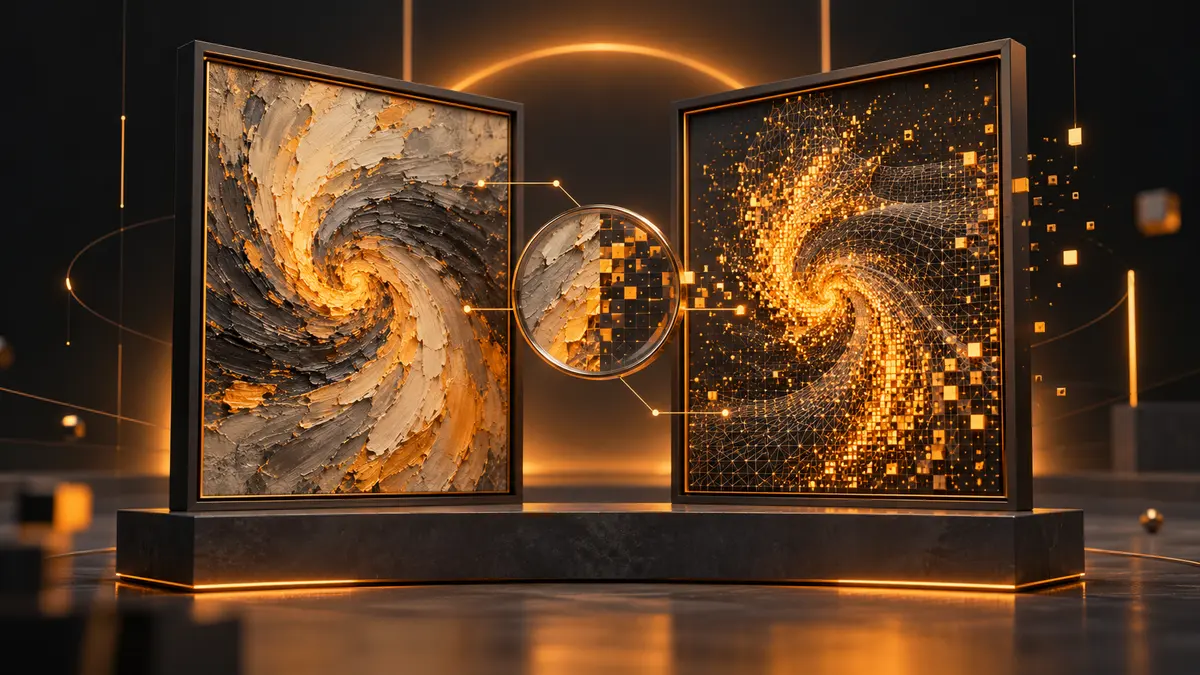
People guess barely better than chance, and detectors trained on photos stumble on drawings and paintings. Here is what the research says, which clues really help, and how our own detector did on eleven artworks.
C2PA Content Credentials are signed provenance data that record which tool made a file and how it was edited. Here is how they work, how to check them, and what happened when we removed them from ten ChatGPT photos.
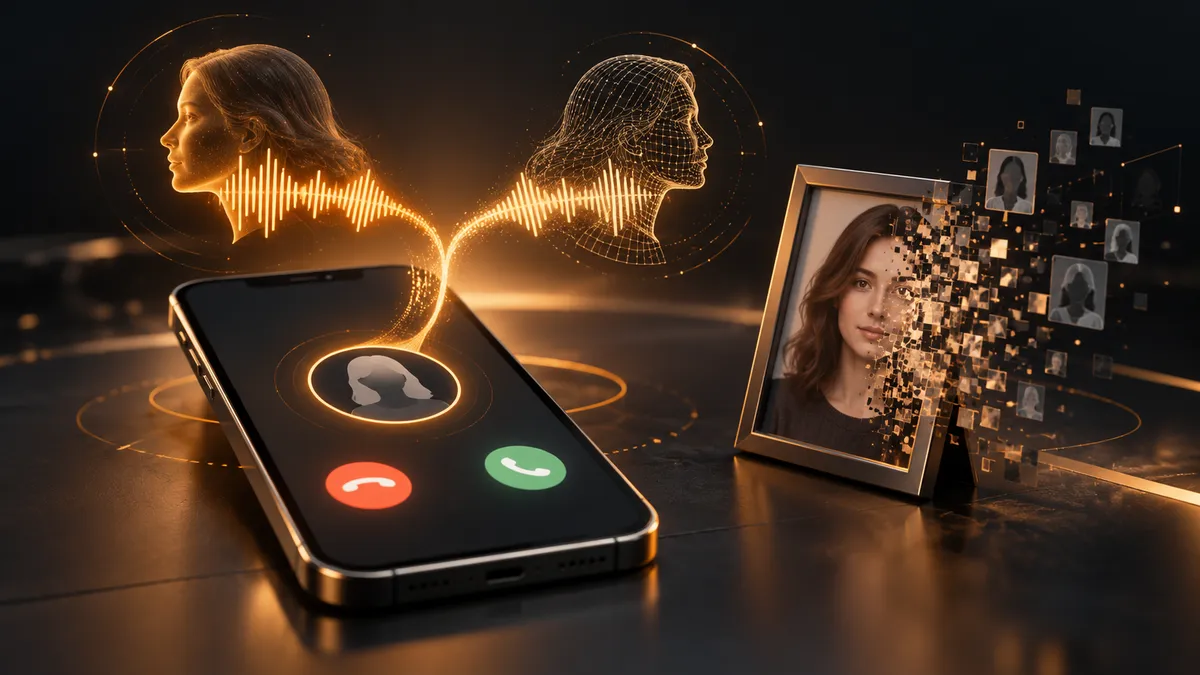
Cloned voices, generated profile photos and SI-written messages give old scams new disguises. Here is what the FBI, the FTC and Europol document, what our detector could and could not catch, and the checks that actually protect you.